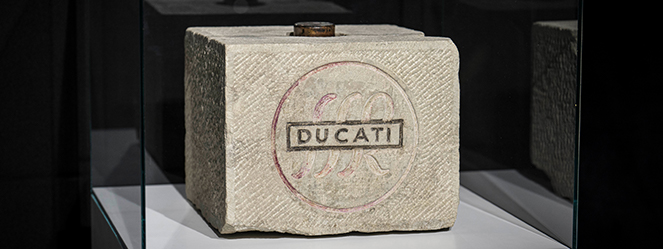
The word "Desmodromic" derives from two Greek words:
"desmos" (controlled, linked) and "dromos" (stroke, course, track); in
mechanics, it is used to refer to mechanisms which have a control for
movement in one direction and another special control for movement in
the opposite direction ("closure" or "return").
Today, "Desmodromic"
commonly refers to the typical valve control system of our motorcycles:
it is currently used on all our manufactured Twin-cylinders and is an
exclusive Ducati system. In practice, the opening stroke and
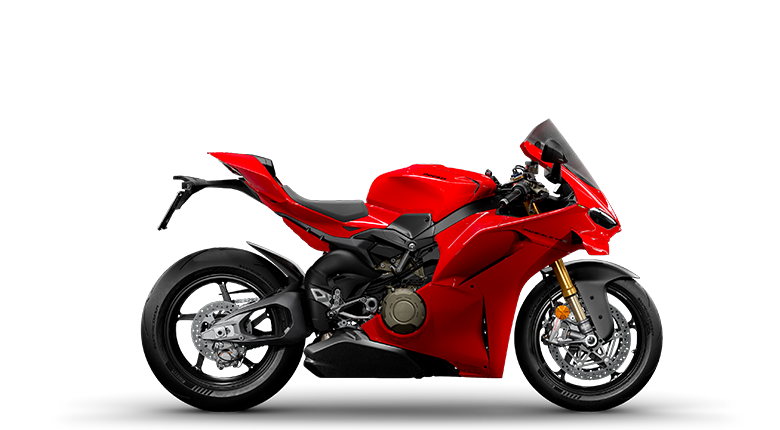
closing stroke of exhaust and intake valves are controlled in this
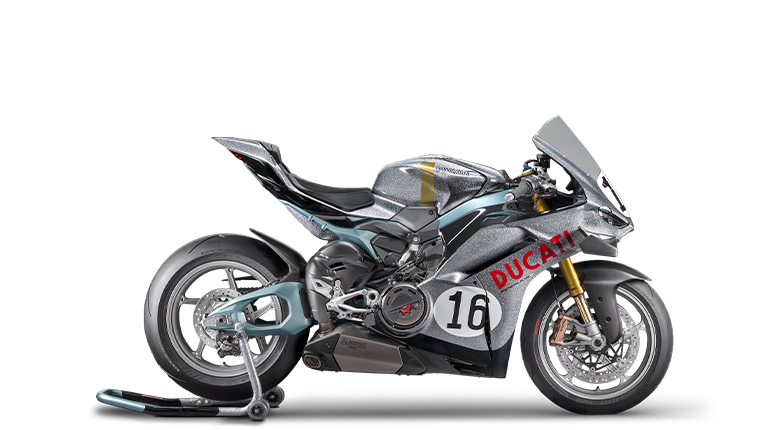
system, while normally, closure is obtained as a result of spring
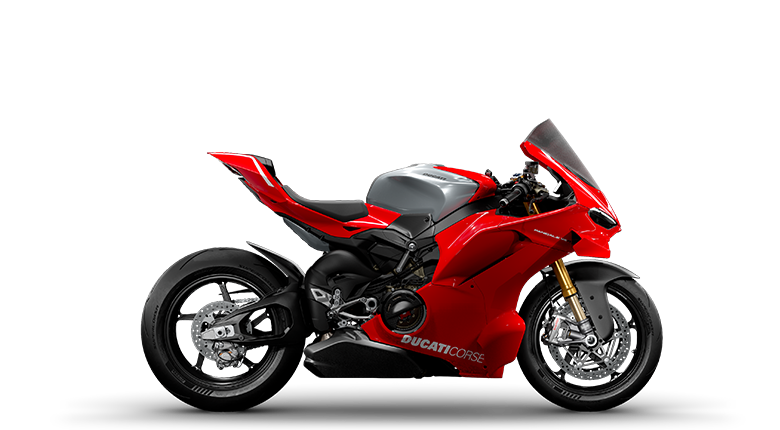
recovery.
The "Desmodromic" concept is not a recent discovery: it has
been known for centuries in mechanics, and was applied in a variety of
forms by motorcycle and automobile manufacturers in the early 20th
century.
In the past, the chronic lack of reliability of springs
suggested the adoption, by bike designers, of various forms of this
system (it was not unusual to find instruction manuals recommending to
take spare springs when leaving on bike journeys, normally fixed to the

outside of the engine in accessible positions for easy replacement!).
However,
none of the solutions that we are going to review (except, of course,
Ducati's) ever made it to mass production, because of the complex
machining and prohibitive cost of materials involved.
1910
Arnott, from England, realized the first Desmodromic timing system: a "shaped annular cam"moves a rocker arm.
1920
The
French manufacturers Bignan build a sports car powered by a Desmodromic
engine: the valve control is a very special system, based on a "skew
disc circular cam". This car won the "Spa 24 hours" race and set some
speed records on the Brooklands circuit, in England, but the mass
production stage was never reached because of heavy maintenance and the
high production costs involved.
1923
Here is the FIAT solution, based on a "double face cam and roller stud"
1954
Mercedes
obtained exceptionally good results and applied the Desmo concept to
Formula 1. The fabulous 8-cylinder W196, used by Fangio to win two world
championships, was based on a highly developed, and at the same time,
essential control system: an opening cam directly controls a shoe at the
upper end of the rod (cylindrical tappet), while another closing cam
uses an out-of-alignment rocker arm, which engages in a hole provided in
the same tappet.
AN ANECDOTE
Enzo Ferrari, worried by the
performance of the "Silver Arrows", was giving a lot of thought to Desmo
at the time. He even talked to Taglioni about it: perhaps, the Ducati Desmo was born right then!
1958
The Mercedes system had
evolved from an idea of J.L.Norton, founder of the Norton factory, who
at last, had designed a 500 cc motorcycle with four overhead camshaft Desmodromic timing: however, the resulting system was too bulky and
complicated and Norton's idea was abandoned.
1956
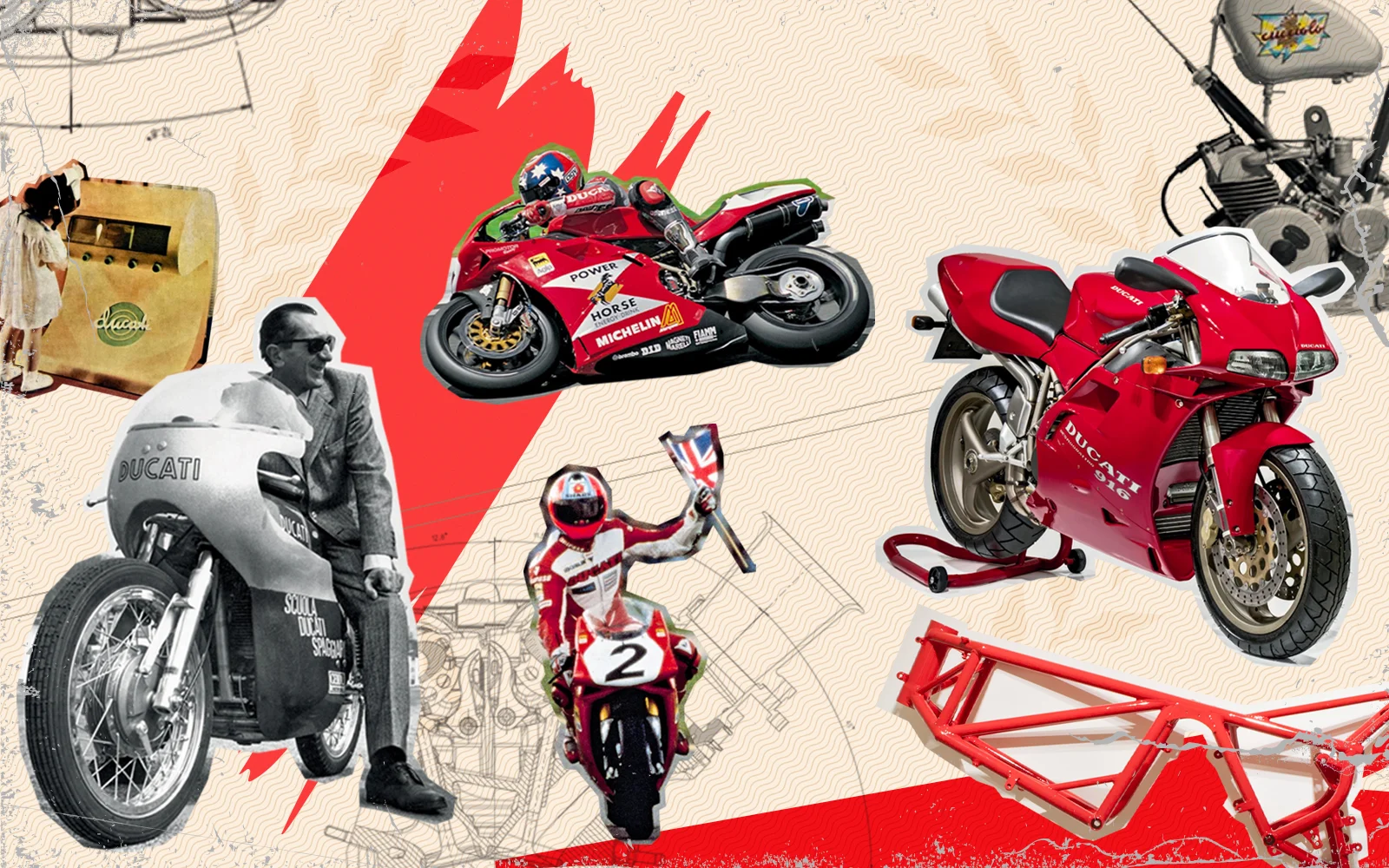
"Ingegner"
Taglioni leads the way to the Ducati Desmodromic system: for the first
time, a Desmodromic timing system with three overhead camshafts, driven
by a vertical shaft and a bevel gear, is mounted on a 125 Grand Prix
bike: this bike and its rider Degli Antoni win the first race, the
Swedish GP.
From now on, the Desmodromic system becomes a Ducati exclusive.
1968
To
see the first mass-produced Desmo, we will have to wait until the Mark 3
Desmo 250/350 in 1968. This bike has practically the same timing system
as today's Twin-cylinder, two-valve bikes, which is evidence of its
exceptional efficiency. At that time it was possible to have a Desmo
Head with an additional cost of 35,000 lire (about 18,000 Euros today).
1972
A historic date for Desmo: the first version of the Desmo system is used during the "200 miles of Imola" in 1972.
Two
years later, in the wake of Paul Smart's fantastic win in that race,
the 750 SS Desmo is produced: the first production Desmo Bicylinder,
considered by many the most beautiful motorcycle ever.
1987
Lucchinelli
wins the Daytona BoTT race riding a 851 cc air-cooled prototype with a
four-valve timing system: the modern Desmo era begins, which would lead
to an incredible series of Superbike wins.
1988
"Desmoquattro"
finally enters the world motorcycle engineering elite: the 851 SBK, the
first standard bike with a four-valve-per-cylinder Desmo engine, is
presented.
1994
The modern era of motorcycle engineering begins when the new, fantastic 916 is released.
2000
A
further evolution of the four-valve Twin-cylinder equips the 996R, the
Ducati top-of-the-range model at the end of the Millennium. Among its
several new features is a new timing design, to obtain 136 HP ( 100kW)
at 10200 RPM and 101 Nm torque at 8000.