-
Models
-
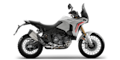
DesertX
![]()
-
new
DesertX
![]()
-
new
DesertX 100
![]() DesertX 100
DesertX 100- 110.3 hp Power
- 92 Nm Torque
- 209 kg Wet weight no fuel
DesertX -
new
DesertX
-
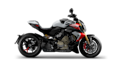
Diavel
![]()
-
V4
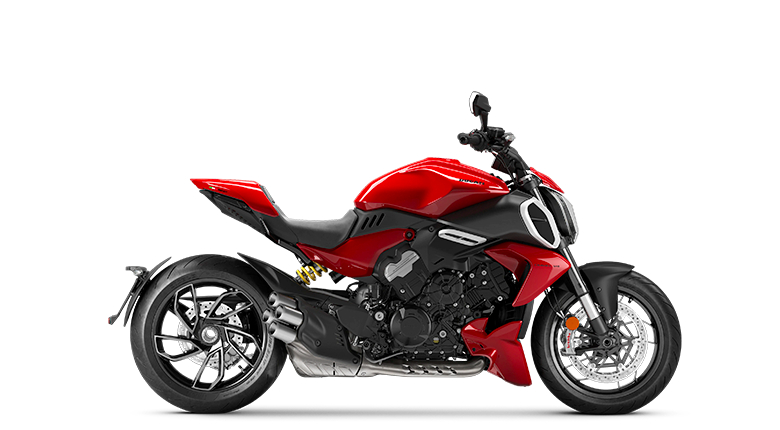
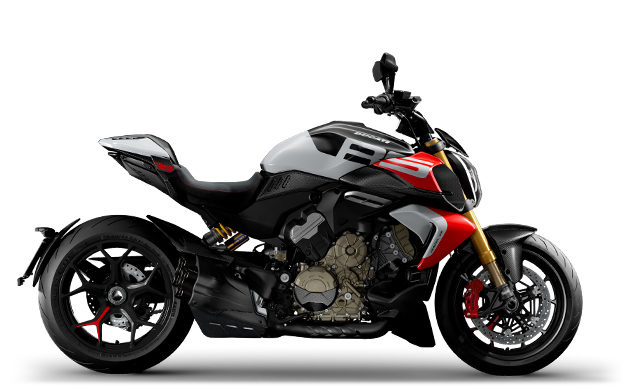
![]() Diavel V4
Diavel V4- 168 hp Power
- 126 Nm Torque
- 223 kg Wet Weight (No Fuel)
From SEK 309,000 KR
NOK 399,300 KR i -
V4 RS
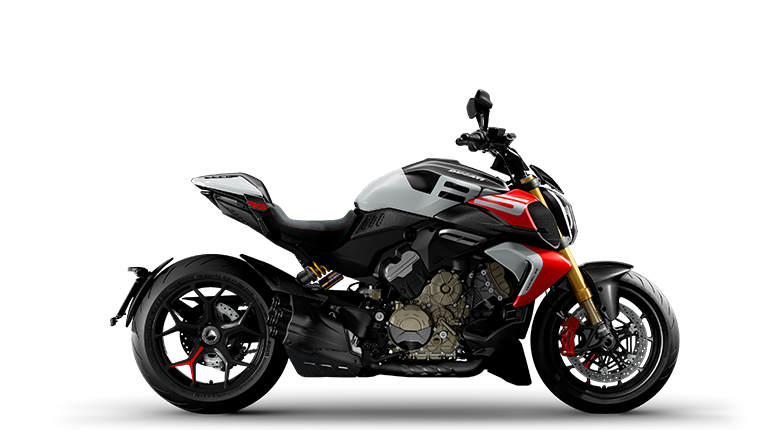
![]() Diavel V4 RS
Diavel V4 RS- 182 hp Power
- 120 Nm Torque
- 220 kg Wet Weight No Fuel
From SEK 433,000 KR
NOK 573,900 KR i -
new
V4 RS 100
![]() Diavel V4 RS 100
Diavel V4 RS 100- 182 hp Power
- 120 Nm Torque
- 220 kg Wet weight no fuel
Diavel -
V4
-
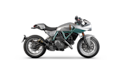
Heritage
![]()
-
new
Formula 73
![]()
Heritage -
new
Formula 73
-
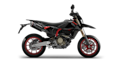
Hypermotard
![]()
-
OVERVIEW
![]() Hypermotard Family: fun and styleExplore the Hypermotard range and choose the model best suited to your needs.
Hypermotard Family: fun and styleExplore the Hypermotard range and choose the model best suited to your needs. -
698 Mono
![]() Hypermotard 698 Mono
Hypermotard 698 Mono- 77.5 hp Power
- 63 Nm Torque
- 151 kg Wet Weight (No Fuel)
From SEK 148,000 KR
NOK 198,300 KR i -
new
698 Mono Nera
![]() Hypermotard 698 Mono Nera
Hypermotard 698 Mono Nera- 77.5 hp Power
- 63 Nm Torque
- 151 kg Wet Weight no Fuel
From SEK 152,900 KR
NOK 202,900 KR i -
V2
![]() Hypermotard V2
Hypermotard V2- 120.4 hp Power
- 94 Nm Torque
- 180 kg Wet Weight No Fuel
From SEK 164,900 KR
NOK 235,300 KR i -
V2 SP
![]() Hypermotard V2 SP
Hypermotard V2 SP- 120.4 hp Power
- 94 Nm Torque
- 177 kg Wet Weight No Fuel
From SEK 209,900 KR
NOK 293,200 KR i -
new
V2 SP 100
![]() Hypermotard V2 SP 100
Hypermotard V2 SP 100- 120.4 hp Power
- 94 Nm Torque
- 177 kg Wet weight no fuel
Hypermotard -
OVERVIEW
-
Monster
![]()
-
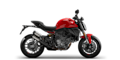
Monster
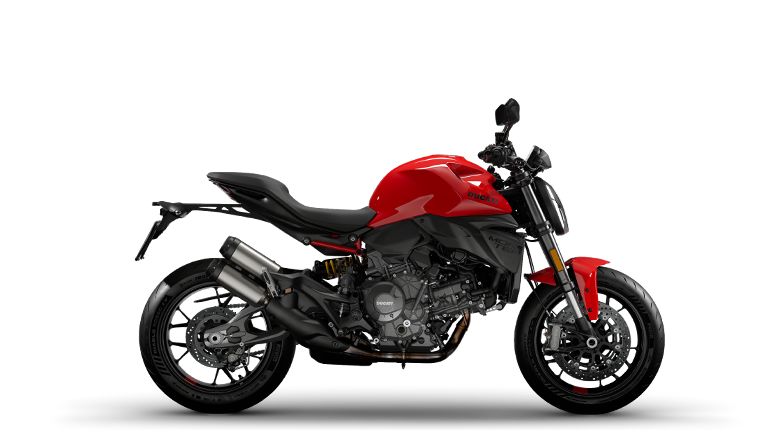
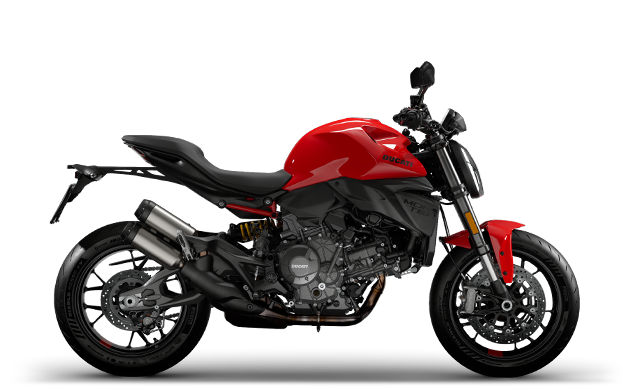
![]() Monster
Monster- 111 hp Power
- 91.1 Nm Torque
- 175 kg Wet Weight (No Fuel)
From SEK 142,900 KR
From NOK 198,600 KR i -
Monster +
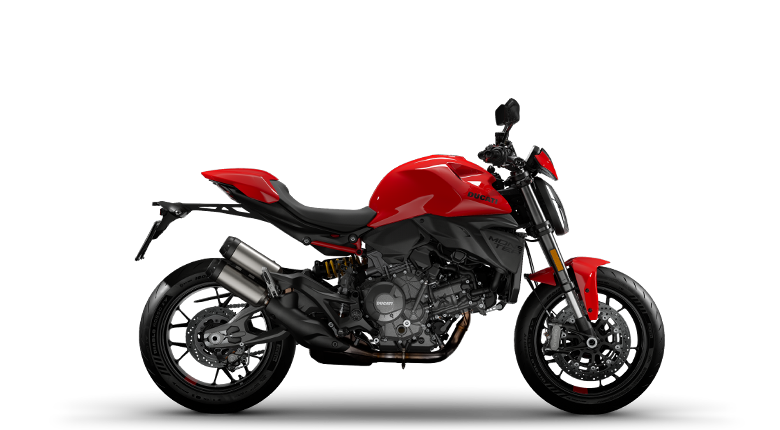
![]() Monster +
Monster +- 111 hp Power
- 91.1 Nm Torque
- 175 kg Wet Weight (No Fuel)
From SEK 146,900 KR
From NOK 202,900 KR i -
new
Monster 100
![]() Monster 100
Monster 100- 111 hp Power
- 91.1 Nm Torque
- 175 kg Wet weight no fuel
Monster -
Monster
-
Multistrada
![]()
-
OVERVIEW
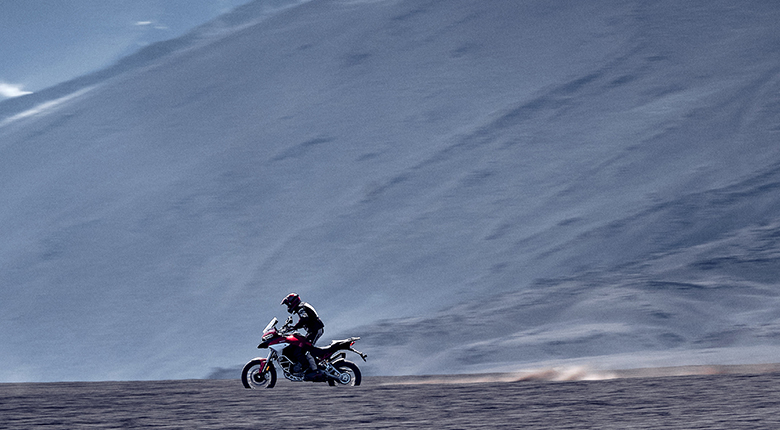
![]() Multistrada Family: Travel according to DucatiDucati's family of Big Duals devoted to travel. Explore the Multistrada range and choose the model best suited to your needs.
Multistrada Family: Travel according to DucatiDucati's family of Big Duals devoted to travel. Explore the Multistrada range and choose the model best suited to your needs. -
V2
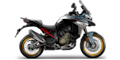
![]() Multistrada V2
Multistrada V2- 115,6 hp Power
- 92,1 Nm Torque
- 199 kg Wet Weight (No Fuel)
From SEK 185,000 KR
NOK 261,900 KR i -
V2 S
![]() Multistrada V2 S
Multistrada V2 S- 115,6 hp Power
- 92,1 Nm Torque
- 202 kg Wet Weight (No Fuel)
From SEK 203,000 KR
NOK 274,900 KR i -
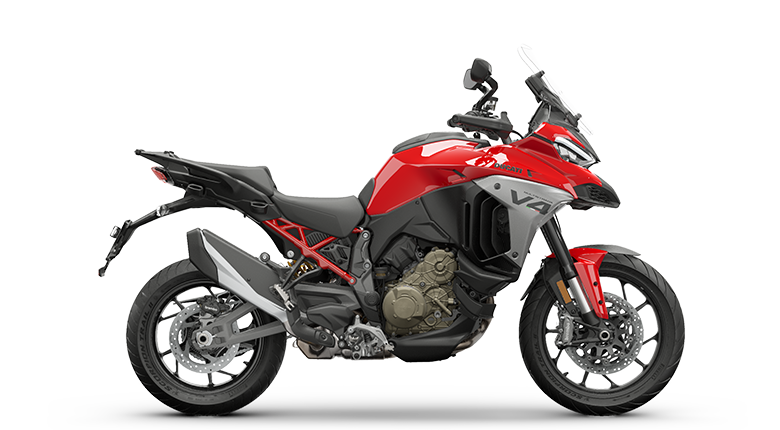
V4
![]() Multistrada V4
Multistrada V4- 170 hp Power
- 124 Nm Torque
- 229 kg Wet Weight (No Fuel)
From SEK 233,000 KR
NOK 344,900 KR i -
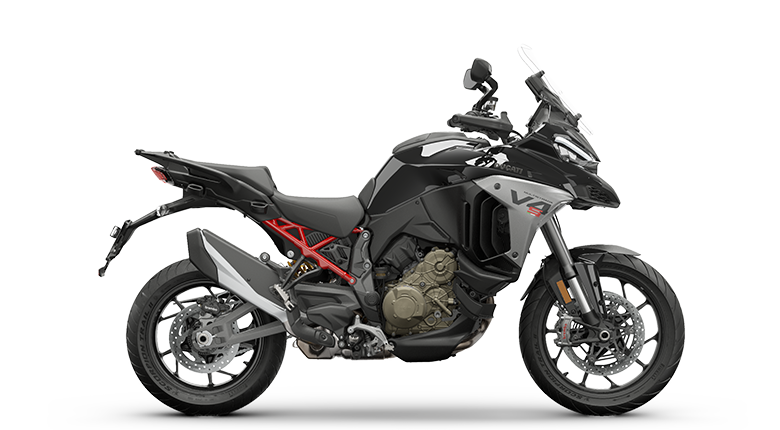
V4 S
![]() Mulltistrada V4 S
Mulltistrada V4 S- 170 hp Power
- 124 Nm Torque
- 231 kg Wet Weight (No Fuel)
From SEK 282,000 KR
NOK 369,800 KR i -
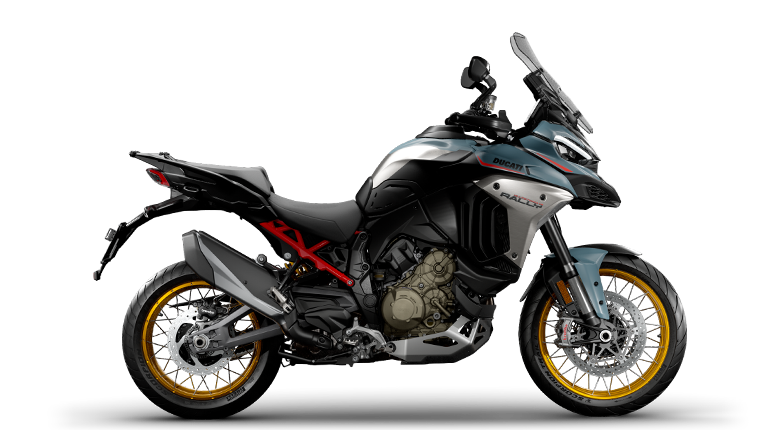
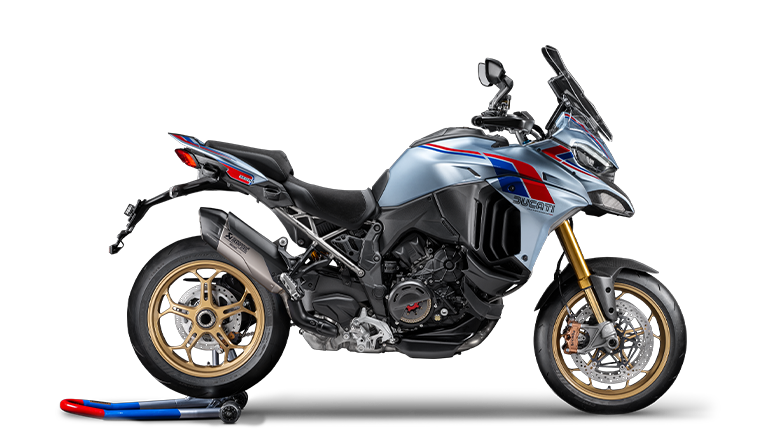
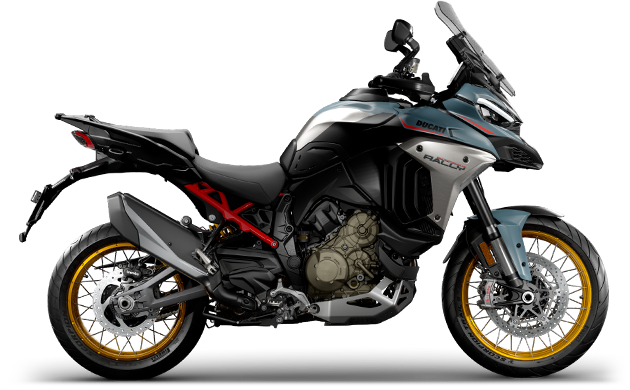
V4 Rally
![]() Multistrada V4 Rally
Multistrada V4 Rally- 170 hp Power
- 123,8 Nm Torque
- 240 kg Wet Weight (No Fuel)
From SEK 318,000 KR
NOK 407,000 KR i -
V4 Pikes Peak
![]() Multistrada V4 Pikes Peak
Multistrada V4 Pikes Peak- 170 hp Power
- 124 Nm Torque
- 227 kg Wet Weight (No Fuel)
From SEK 360,000 KR
NOK 472,900 KR i -
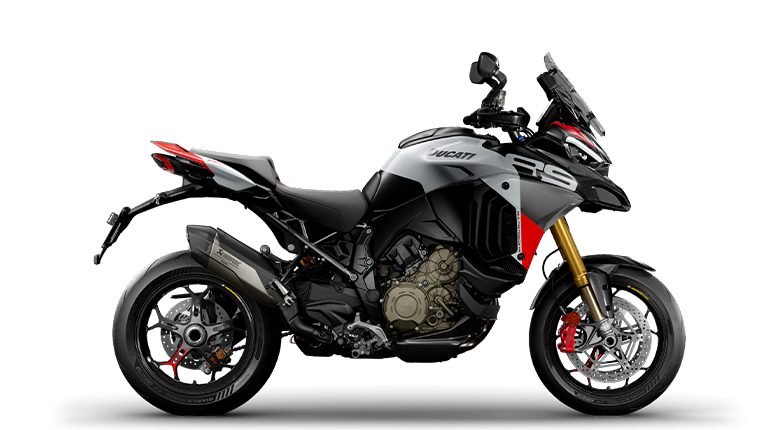
V4 RS
![]() Multistrada V4 RS
Multistrada V4 RS- 180 hp Power
- 118 Nm Torque
- 225 kg Wet Weight (No Fuel)
From SEK 427,000 KR
580,500 NOK KR i -
new
V4 RS 100
![]() Multistrada V4 RS 100
Multistrada V4 RS 100- 180 hp Power
- 118 Nm Torque
- 225 kg Wet weight no fuel
Multistrada -
OVERVIEW
-
Off-Road
![]()
-
new
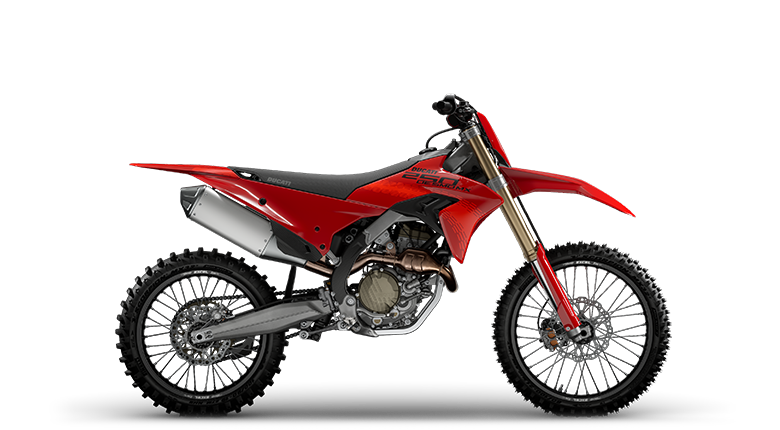
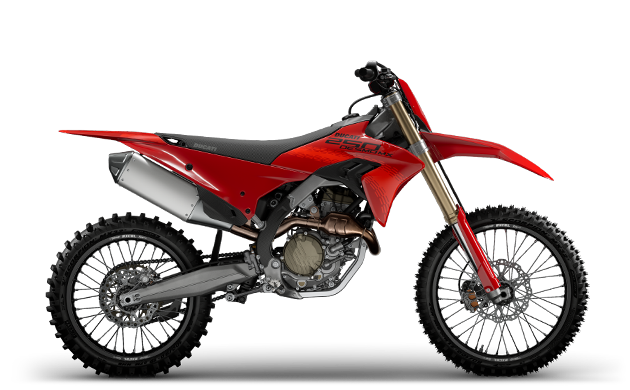
Desmo250 MX
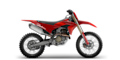
![]() Desmo250 MX
Desmo250 MX- 44.5 hp Power
- 28.3 Nm Torque
- 103 kg Wet weight no fuel
From SEK 119,000 KR
NOK 120,700 KR i -
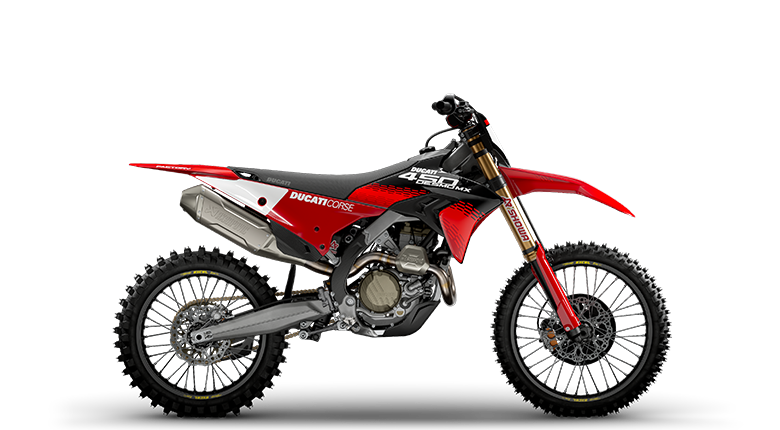
Desmo450 MX
![]() Desmo450 MX
Desmo450 MX- 63,5 hp Power
- 53,5 Nm Torque
- 104,8 kg Wet Weight No Fuel
From SEK 131,000 KR
NOK 133,000 KR i -
new
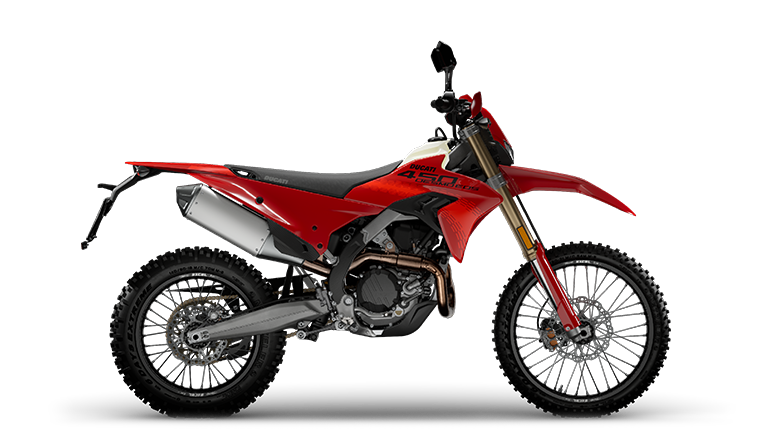
Desmo450 EDS
![]() Desmo450 EDS
Desmo450 EDS- 21.5 hp Power
- 27.8 Nm Torque
- 117 kg Wet Weight no Fuel
From SEK 131,500 KR
NOK 152,300 KR i -
new
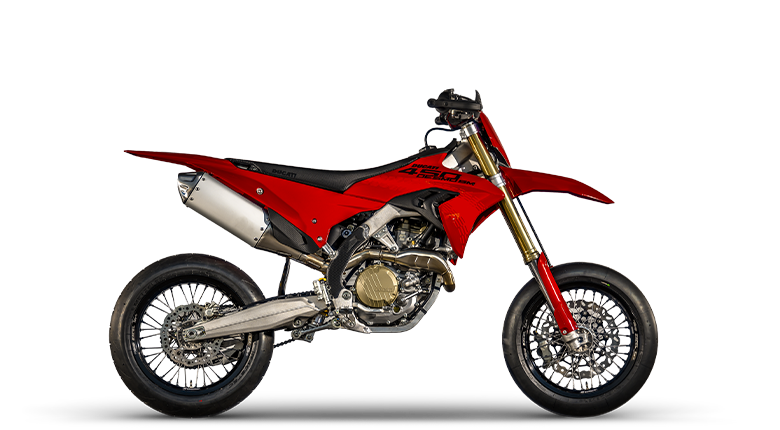
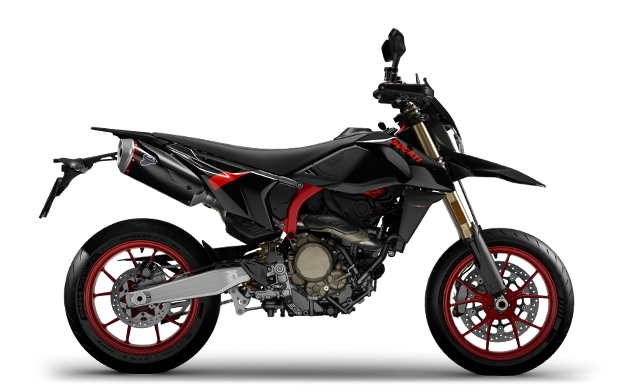
Desmo450 SM
![]() Desmo450 SM
Desmo450 SM -
new
Desmo450 MX Factory
![]() Desmo450 MX Factory
Desmo450 MX Factory- 63.5 hp Power
- 53.5 Nm Torque
- 104 kg Wet Weight No Fuel
From SEK 156,000 KR
NOK 162,300 KR i
Off-Road -
new
Desmo250 MX
-
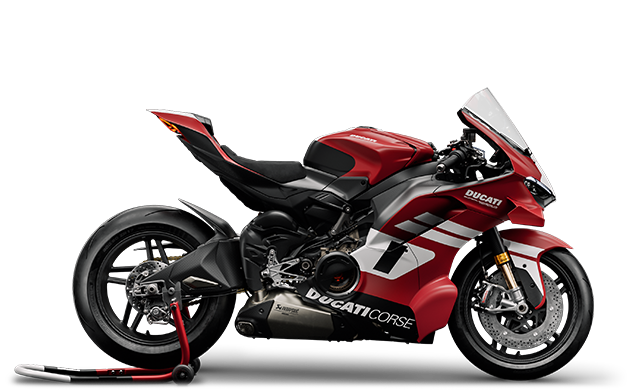
Panigale
![]()
-
OVERVIEW
![]() Panigale Family: Pure Italian excellence.An example of Italian excellence, with racing DNA and competitive spirit: the Panigale is the object of desire of every Ducatista.
Panigale Family: Pure Italian excellence.An example of Italian excellence, with racing DNA and competitive spirit: the Panigale is the object of desire of every Ducatista. -
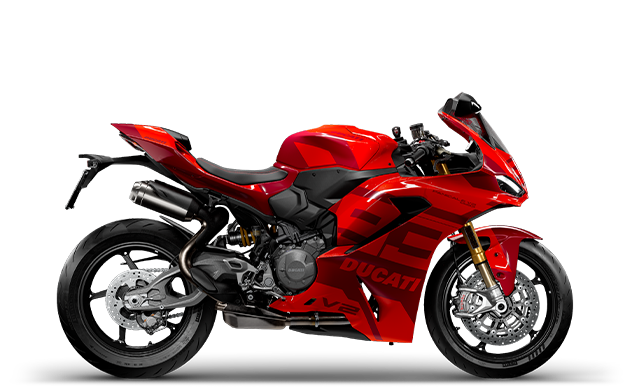
V2
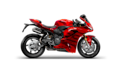
![]() Panigale V2
Panigale V2- 120 hp Power
- 93.3 Nm Torque
- 179 kg Wet Weight (No Fuel)
From SEK 179,000 KR
NOK 248,900 KR i -
V2 S
![]() Panigale V2 S
Panigale V2 S- 120 hp Power
- 93.3 Nm Torque
- 176 kg Wet Weight (No Fuel)
From SEK 195,900 KR
NOK 274,500 KR i -
new
V2 S 100
![]() Panigale V2 S 100
Panigale V2 S 100- 120 hp Power
- 93.3 Nm Torque
- 176 kg Wet weight no fuel (S version)
-
V2 MM93
![]() Panigale V2 MM93
Panigale V2 MM93- 120 hp Power
- 93.3 Nm Torque
- 175.5 kg Wet Weight No Fuel
From SEK 227,000 KR
NOK 323,900 KR i -
V2 FB63
![]() Panigale V2 FB63
Panigale V2 FB63- 120 hp Power
- 93.3 Nm Torque
- 175.5 kg Wet Weight No Fuel
From SEK 227,000 KR
NOK 323,900 KR i -
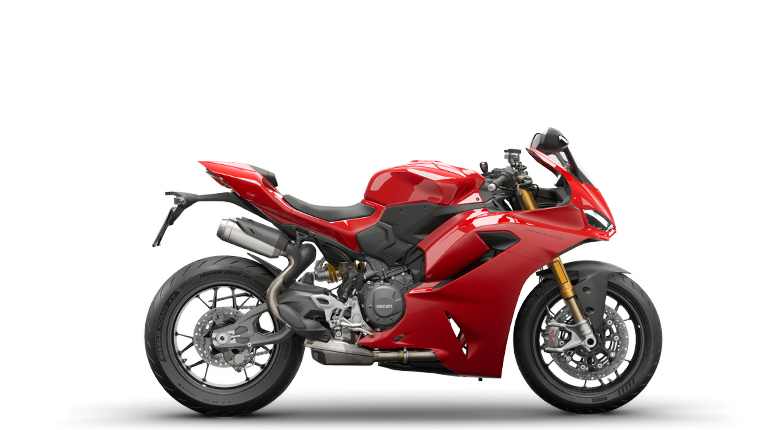
V4
![]() Panigale V4
Panigale V4- 216 hp Power
- 120.9 Nm Torque
- 191 kg Wet Weight (No Fuel)
From SEK 304,000 KR
NOK 405,900 KR i -
V4 S
![]() Panigale V4 S
Panigale V4 S- 216 hp Power
- 120.9 Nm Torque
- 187 kg Wet Weight (No Fuel)
From SEK 386,000 KR
NOK 474,900 KR i -
new
V4 S 100
![]() Panigale V4 S 100
Panigale V4 S 100- 216 hp Power
- 120.9 Nm Torque
- 187 kg Wet weight no fuel ("S" version)
-
V4 R
![]() Panigale V4 R
Panigale V4 R- 218 hp Power
- 114.5 Nm Torque
- 186.5 kg Wet weight no fuel
From SEK 480,900 KR
NOK 572,900 KR i -
new
V4 Márquez 2025 World Champion Replica
![]() Panigale V4 MM93
Panigale V4 MM93- 218.5 hp Power
- 122.1 Nm Torque
- 186.5 kg Wet Weight (No Fuel)
From SEK 993,000 KR
NOK 1,249,300 KR i
Panigale -
OVERVIEW
-
Streetfighter
![]()
-
V2
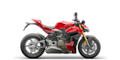
![]() Streetfighter V2
Streetfighter V2- 120 hp Power
- 93.3 Nm Torque
- 178 kg Wet Weight (No Fuel)
From SEK 163,000 KR
NOK 227,900 KR i -
V2 S
![]() Streetfighter V2 S
Streetfighter V2 S- 120 hp Power
- 93.3 Nm Torque
- 175 kg Wet Weight (No Fuel)
From SEK 179,900 KR
NOK 253,800 KR i -
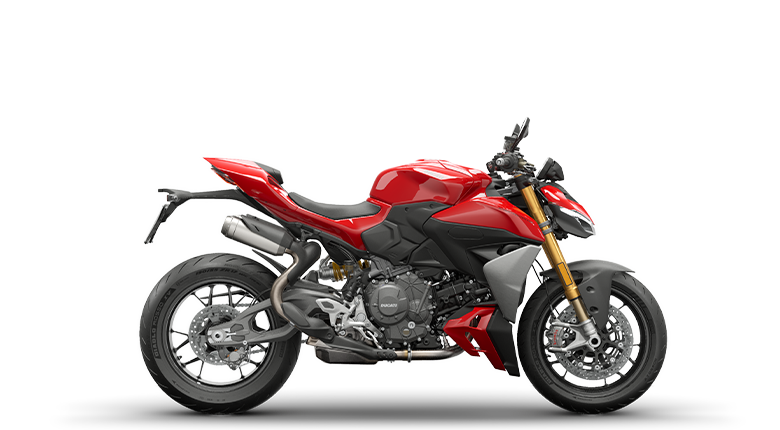
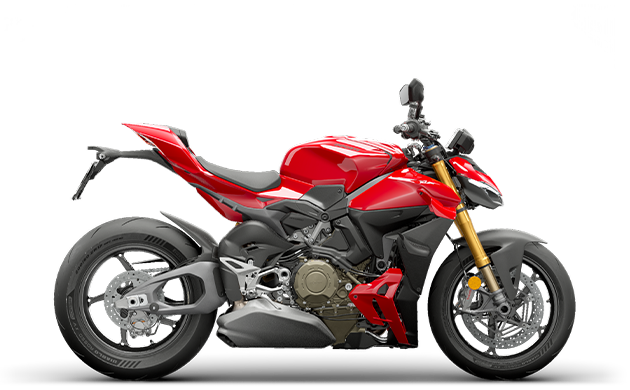
V4
![]() Streetfighter V4
Streetfighter V4- 214 HP Power
- 120 Nm Torque
- 191 kg Wet Weight (No Fuel)
From SEK 281,000 KR
NOK 410,900 KR i -
V4 S
![]() Streetfighter V4 S
Streetfighter V4 S- 214 hp Power
- 120 Nm Torque
- 189 kg Wet Weight (No Fuel)
From SEK 314,000 KR
NOK 450,600 KR i -
new
V4 S 100
![]() Streetfighter V4 S 100
Streetfighter V4 S 100- 214 hp Power
- 120 Nm Torque
- 189 kg Wet weight no fuel (S version)
Streetfighter -
V2
-
Superleggera
![]()
-
new
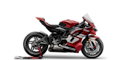
Superleggera V4 Centenario
![]() Superleggera V4 Centenario
Superleggera V4 Centenario- 228 hp Power
- 119 Nm Torque
- 173 kg Wet Weight no Fuel
From SEK 1,650,000 KR
NOK 1,999,000 KR i
Superleggera -
new
Superleggera V4 Centenario
-
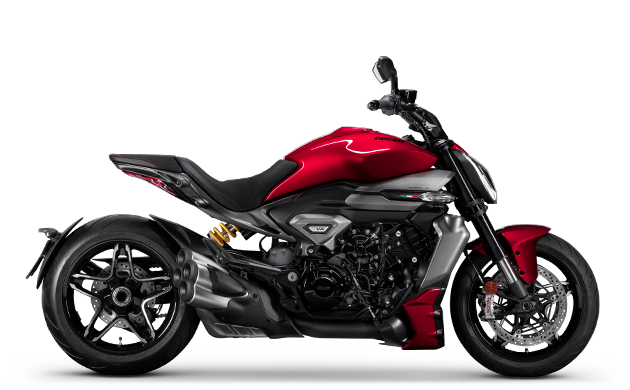
XDiavel
![]()
-
V4
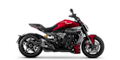
![]() XDiavel V4
XDiavel V4- 168 hp Power
- 126 Nm Torque
- 229 kg Wet Weight (No Fuel)
From SEK 329,000 KR
NOK 423,900 KR i -
new
V4 100
![]() XDiavel V4 100
XDiavel V4 100- 168 hp Power
- 126 Nm Torque
- 229 kg Wet weight no fuel
XDiavel -
V4
-
![]()
-
OVERVIEW
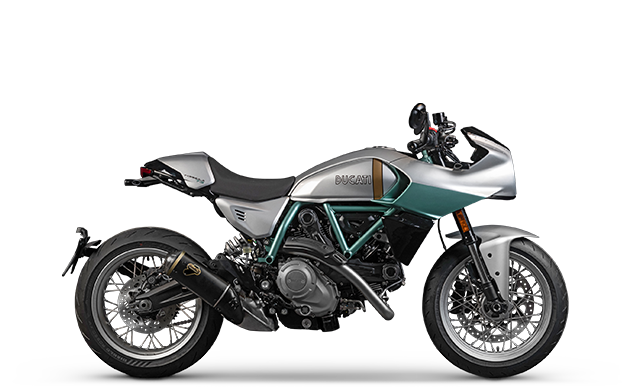
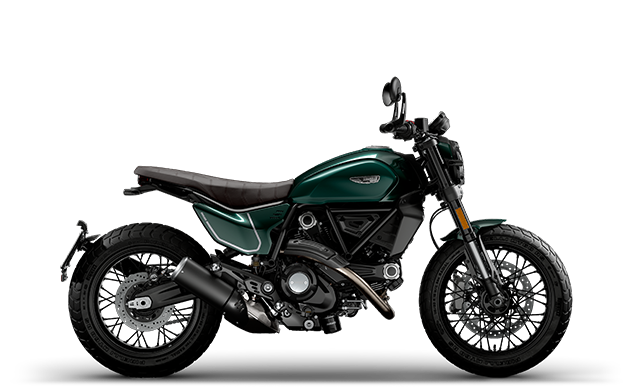
![]() SCRAMBLERFreedom. Expressiveness. Colour. A unique mix of authenticity, lifestyle and modern design. Remix your beliefs and accept new challenges: the new generation of Scrambler®️ is here. Choose your mood.
SCRAMBLERFreedom. Expressiveness. Colour. A unique mix of authenticity, lifestyle and modern design. Remix your beliefs and accept new challenges: the new generation of Scrambler®️ is here. Choose your mood. -
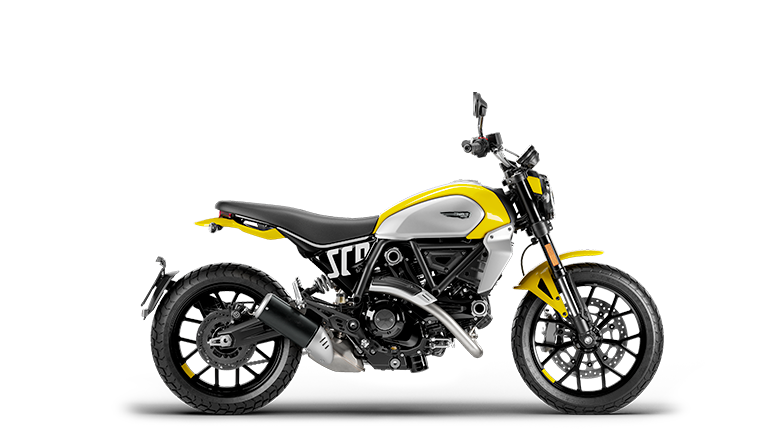
Icon Dark
![]() Icon DarkSEK 113,000 KR
Icon DarkSEK 113,000 KR
NOK 161,300 KR -
ICON
![]() ICONSEK 128,000 KR
ICONSEK 128,000 KR
NOK 179,800 KR -
FULL THROTTLE
![]() FULL THROTTLESEK 140,000 KR
FULL THROTTLESEK 140,000 KR
NOK 199,200 KR -
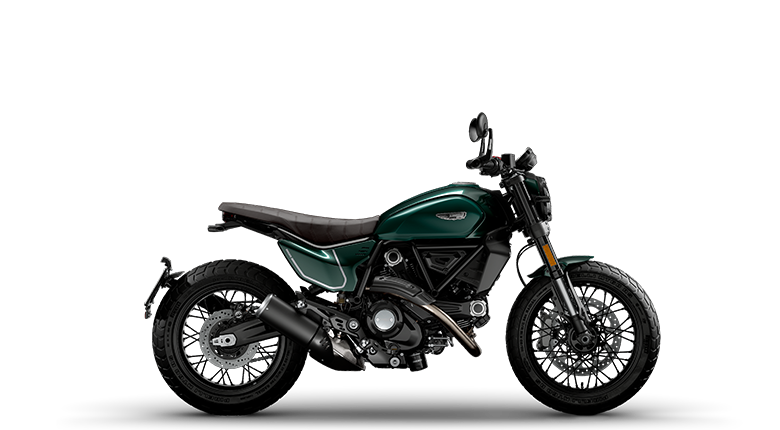
NIGHTSHIFT
![]() NIGHTSHIFTSEK 140,000 KR
NIGHTSHIFTSEK 140,000 KR
NOK 199,200 KR -
new
Scrambler 100
![]() Scrambler 100
Scrambler 100
SCRAMBLER -
OVERVIEW
-
A2 Licence
![]()
-
Overview
![]() A2 LicenceDiscover the whole range of motorcycles available from the A2 Licence
A2 LicenceDiscover the whole range of motorcycles available from the A2 Licence -
new
DesertX
![]()
-
698 Mono
![]() Hypermotard 698 Mono
Hypermotard 698 Mono- 77.5 hp Power
- 63 Nm Torque
- 151 kg Wet Weight (No Fuel)
From SEK 148,000 KR
NOK 198,300 KR i -
Hypermotard V2 / V2 SP
![]() Hypermotard V2 / V2 SP
Hypermotard V2 / V2 SP- 120.4 hp Power
- 94 Nm Torque
- 180 kg Wet Weight No Fuel
From SEK 164.900 KR
NOK 235,300 KR i -
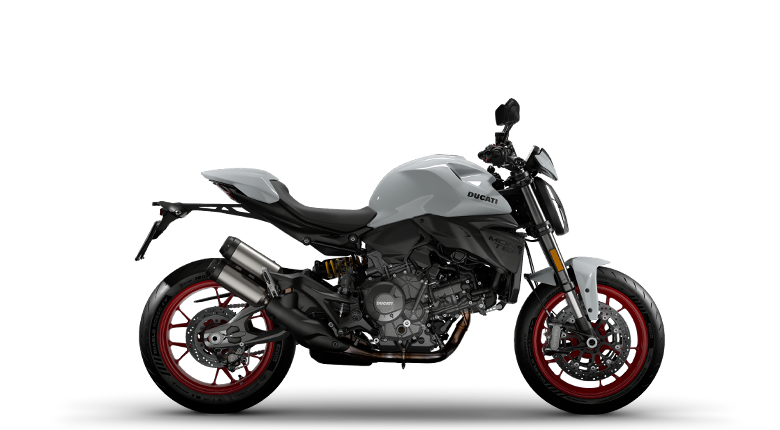
Monster / Monster +
![]() Monster / Monster +
Monster / Monster +- 111 hp Power
- 91.1 Nm Torque
- 175 kg Wet Weight (No Fuel)
From SEK 142,900 KR
From NOK 198,600 KR i -
Multistrada V2 / V2 S
![]() Multistrada V2
Multistrada V2- 115,6 hp Power
- 92,1 Nm Torque
- 199 kg Wet Weight (No Fuel)
From SEK 185,000 KR
NOK 261,900 KR i -
Panigale V2 / V2 S
![]() Panigale V2 / V2 S
Panigale V2 / V2 S- 120 hp Power
- 93.3 Nm Torque
- 176 kg Wet Weight (No Fuel)
From SEK 179,000 KR
NOK 248,900 KR i -
Streetfighter V2 / V2 S
![]() Streetfighter V2 / V2 S
Streetfighter V2 / V2 S- 120 hp Power
- 93.3 Nm Torque
- 175 kg Wet Weight (No Fuel)
From SEK 163,000 KR
NOK 227,900 KR i -
SCRAMBLER RANGE
![]() Ducati Scrambler RangeAll models of the Scrambler Ducati range are available in a 35Kw version for A2 licences
Ducati Scrambler RangeAll models of the Scrambler Ducati range are available in a 35Kw version for A2 licences
A2 Licence -
Overview
-
Ducati Cycling
![]()
-
Overview
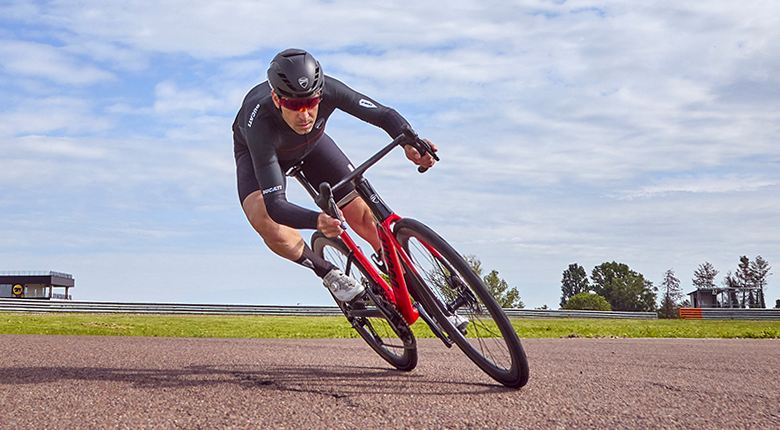
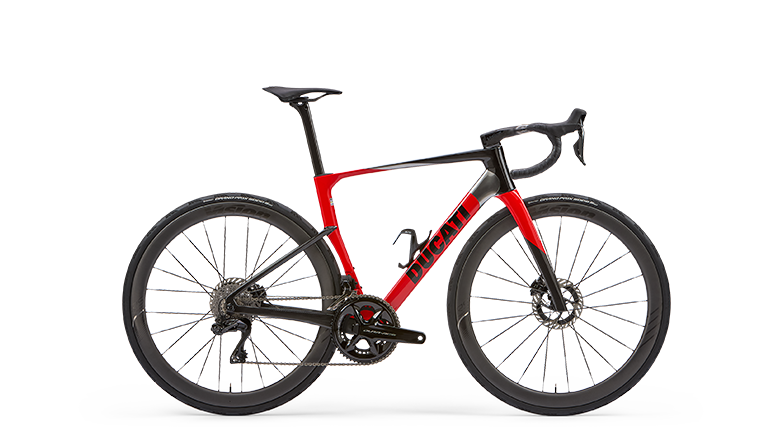
![]() Ducati CyclingThe new Ducati Road, Gravel and E-MTB models, developed in collaboration with Diamant S.r.l. (Zecchetto Group), combine performance, innovation, design and build quality to deliver engaging riding experiences both on and off-road.
Ducati CyclingThe new Ducati Road, Gravel and E-MTB models, developed in collaboration with Diamant S.r.l. (Zecchetto Group), combine performance, innovation, design and build quality to deliver engaging riding experiences both on and off-road. -
new
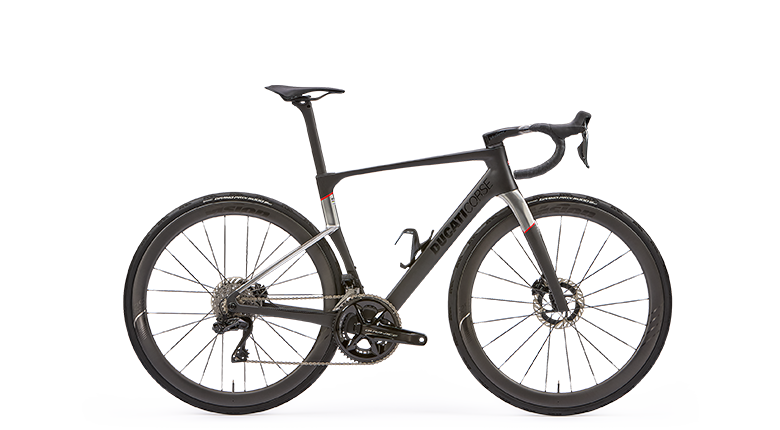
Monoscocca R
![]() Monoscocca R
Monoscocca R -
new
Monoscocca RR
![]() Monoscocca RR
Monoscocca RR -
new
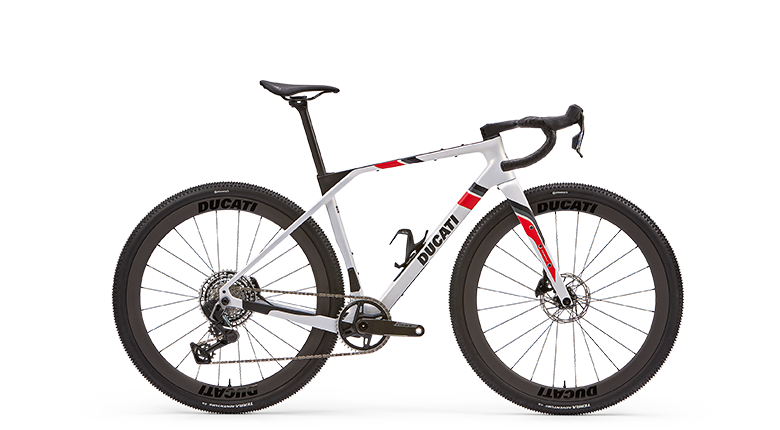
GraviaX R
![]() GraviaX R
GraviaX R -
new
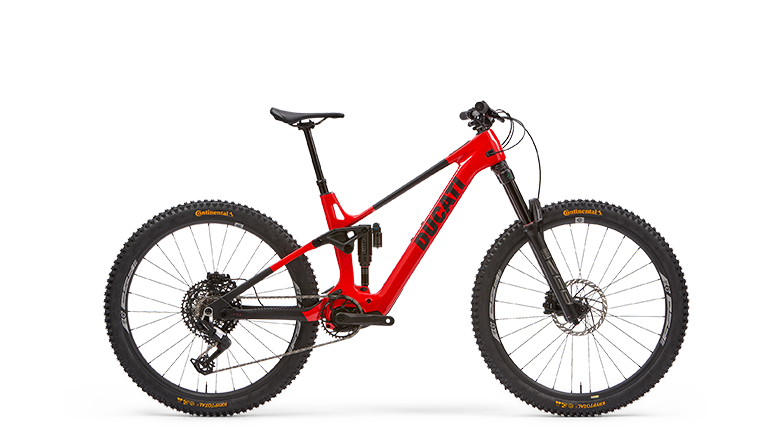
DM-160 R
![]() DM-160 R
DM-160 R -
new
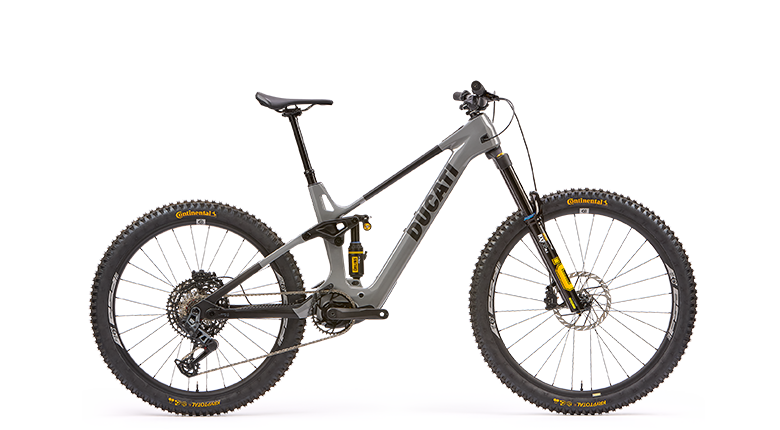
DM-170 RR
![]() DM-170 RR
DM-170 RR
Ducati Cycling -
Overview
-
Ducati Speciale
![]()
-
Ducati Speciale
![]() Ducati SpecialeIn the extraordinary world of Ducati special editions, a compelling tribute to craftsmanship and prestigious partnerships.
Ducati SpecialeIn the extraordinary world of Ducati special editions, a compelling tribute to craftsmanship and prestigious partnerships. -
new
Limited Series
![]() Limited SeriesA concentration of design, engineering excellence, and technology: collectibles celebrating historic moments, produced in limited and numbered editions. Discover the special editions created in collaboration with other brands.
Limited SeriesA concentration of design, engineering excellence, and technology: collectibles celebrating historic moments, produced in limited and numbered editions. Discover the special editions created in collaboration with other brands. -
Racing Replica
![]() Racing ReplicaThe motorcycles that made history last season. Autographed by Moto GP and Superbike champions, with special equipment in a very limited edition that pays tribute to your favourite rider.
Racing ReplicaThe motorcycles that made history last season. Autographed by Moto GP and Superbike champions, with special equipment in a very limited edition that pays tribute to your favourite rider. -
Racing Real
![]() Racing RealEach of these motorcycles tells a part of Ducati's racing history: it has experienced the track, challenged the limits, and written pages of passion and success.
Racing RealEach of these motorcycles tells a part of Ducati's racing history: it has experienced the track, challenged the limits, and written pages of passion and success. -
Ducati Unica
![]() Ducati UnicaThe customisation program dedicated to those who want to design and build their own, exclusive and unique motorcycle.
Ducati UnicaThe customisation program dedicated to those who want to design and build their own, exclusive and unique motorcycle.
Ducati Speciale -
Ducati Speciale
-
- Current Offers
- Events
- WDW 2026
 DesertX
 Diavel
 Heritage
  Hypermotard
 Monster
 Multistrada
 Off-Road
 Panigale
 Streetfighter
 Superleggera
 XDiavel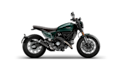
 A2 Licence
 Ducati Cycling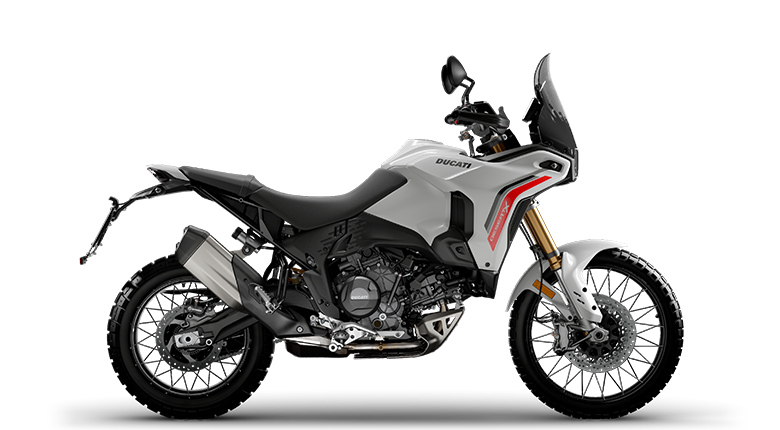












- Models
- Equipment
- Ducati World
- Racing
- App
- Service and maintenance
- Ducati Club
- Corporate
- Current Offers

- Models
- Accessories
- Apparel
- Collab

Configurator
The online Configurator is the perfect way to start your journey of discovery and customising your Ducati
Configurator- Your Vehicle
- Assistance and Maintenance
4 Ever Ducati
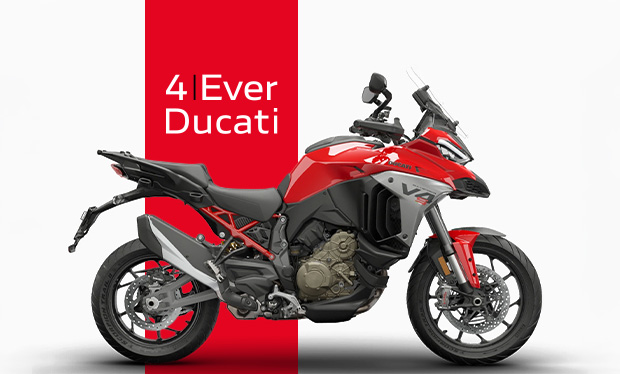
Ducati presents the 4-year warranty for all Multistrada V4, Multistrada V2 and DesertX models.
4Ever DucatiDucati unveils Collezione 100: ten contemporary icons celebrate 100 years of Ducati history

- Ten significant moments in Ducati's history have inspired ten unique motorcycles, produced in a numbered series limited to just one hundred units each
- Technology, design, art: each motorcycle features unique components which, together with its livery, make it a one-of-a-kind icon, accompanied by two works of art
- Owners of each model will be able to complete the “Collezione 100” experience with a helmet and jacket in the same livery as the motorcycle
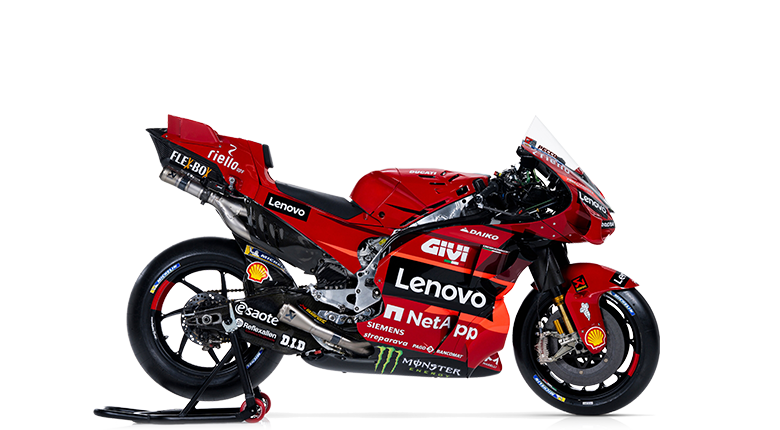
- The two DesmosediciGP bikes of the Ducati Lenovo team will race with a special livery that combines those of the Collezione 100 into a single design
Scarperia (Florence, Italy), 28 May 2026 – The Mugello circuit, where the Desmosedici MotoGP bikes have written numerous unforgettable pages in Ducati's racing history, is the setting for the presentation of the Collezione 100. Ten liveries, ten numbered editions, all strictly limited to just 100 units each. True contemporary icons created to mark the centenary of the Borgo Panigale-based manufacturer.
Each model is made unique by a special specification: a livery inspired by an iconic motorcycle from Ducati's history, Alcantara or leather seats with an embroidered Ducati logo, and premium technical details such as Centenario Bronze brake calipers. This colour is exclusive to this collection and is also used for the fuel cap crown, and for the plate bearing the model number riveted onto the steering head or the billeted triple clamps. Various mechanical components on each bike feature an exclusive colour scheme that complements the historic livery. The dry clutch, a first for V2 models*, completes the authenticity of this historic collection.
Each bike comes with a dedicated rear stand, finished in the same colours as the livery, a bike cover and a certificate of authenticity. And of course, as with all Ducati collector's bikes, the experience of getting on the bike is made even more special by the dashboard featuring a dedicated ignition ceremony. Each owner of the Collezione 100 Collection can complete their look with a helmet and a technical jacket in a limited edition, characterized by a colour scheme that reflects that of the motorbike.**
The Collezione 100 represents yet another link between Ducati and the art world. Ugo Nespolo, a leading figure in Italian art of the late 20th century and a passionate Ducati enthusiast, has enthusiastically joined this project. Each model in the 100 Collection will be accompanied by a pair of numbered art prints bearing the same serial number as the motorcycle and signed by Nespolo himself, who has interpreted every model in the 100 Collection and the historic motorcycle that inspired its livery in his own unmistakable, colourful and dynamic style.
The result is a collection of true gems: unique, unmistakable and full of character.
The presentation took place on the legendary straight of the Tuscan circuit where, for the first time in MotoGP history, Ducati staged a vernissage. A veritable art gallery trail, where Nespolo's works welcomed guests, accompanying them on a journey culminating in the unveiling of the ten motorcycles of the 100 Collection.
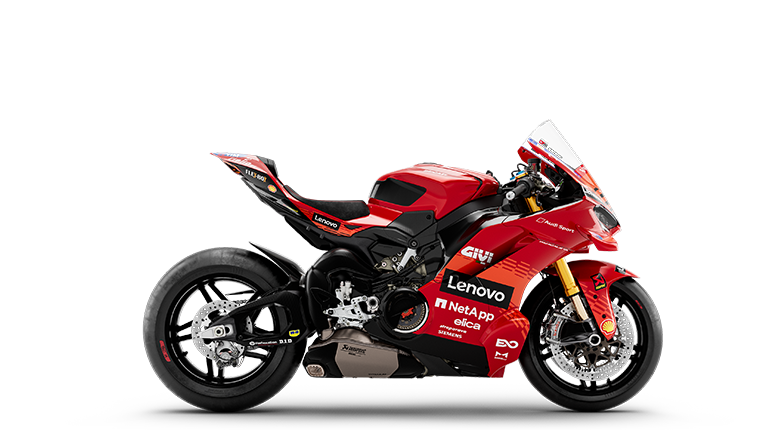
During the event, Marc Marquez and Pecco Bagnaia unveiled the Lenovo team's bikes, featuring a special livery for the Mugello race. The design combines historic Ducati logos with dynamic geometric patterns, bringing together the ten graphics from the 100 Collection bikes on the fairing. The details celebrating the centenary and the dates 1926–2026 feature glitter, evoking the historic 750 Imola Desmo, whilst on the front fairing the modern graphics contrast with an oval number plate and vintage-style font.
Several Ducati partners have drawn inspiration to create products dedicated to the Borgo Panigale manufacturer's centenary. The Collezione 100 has in fact inspired a series of four rucksacks created by Piquadro, unveiled during the event. Carrera, the official sponsor of the Ducati Lenovo team, has instead presented the Anniversary Edition sunglasses, produced in a numbered series limited to 500 pieces.
The next opportunity for the public to see the Collezione 100 in person will be at World Ducati Week, where they can be admired in a space reserved for all Ducatisti on 3, 4 and 5 July.
Subsequently, the ten motorcycles will embark on a journey that will take them to the Goodwood Festival of Speed, a world-class event and a must-attend for car and motorbike enthusiasts. Finally, the 100 Collection will return to Bologna, where it will be proudly displayed in various museums across the region.
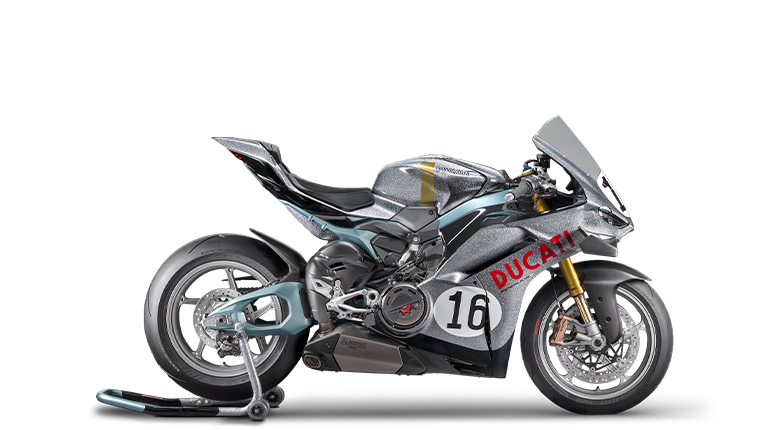
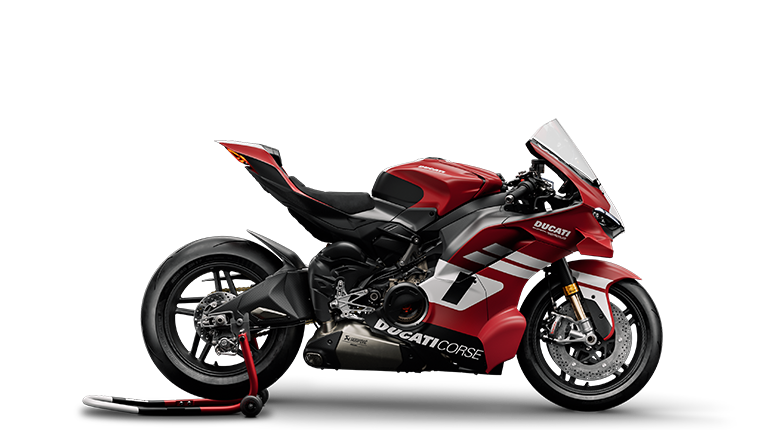
Panigale V4 S 100 (750 Imola Desmo – 1972)
The livery of the Panigale V4 S 100 is inspired by the graphics of the bike that won the first edition of the Imola 200 Miles race in 1972 with riders Paul Smart and Bruno Spaggiari.
The 750 Imola Desmo was developed based on the 750 GT, Ducati's first twin-cylinder road bike. The bike conceptually took the mechanical basis of the 750 GT, but used the desmodromic distribution system, not featured on the GT, and had the bodywork of the 500 GP, which was instead created for racing in the premier class. The characteristic "glittery" silver colour, which harked back to the science fiction aesthetic so popular at the time, had already been used in production by Ducati for the 250 and 350 Desmo single-cylinder bikes, later applied to the 500 GP and then to the 750 Imola Desmo.
The victory at Imola represented an unexpected and triumphant moment for the Borgo Panigale manufacturer, which defeated Giacomo Agostini and his MV Agusta. The echo of the Imola triumph by riders Paul Smart and Bruno Spaggiari brought Ducati enormous popularity, so much so that, by popular demand, the following year, in 1973, the 750 Supersport Desmo was built, the first twin-cylinder desmodromic road bike built by the Borgo Panigale manufacturer.
The Panigale V4 S 100 is enhanced by an Alcantara seat with an embroidered Ducati 100 logo, wings, mudguards and engine and exhaust covers in premium carbon fibre, and features the name and serial number on a Centenary Bronze plate riveted to the billet aluminium triple clamp. The dry clutch and titanium and carbon fibre Akrapovič exhaust also make the Panigale V4 S 100's sound unique. The standard equipment includes mirror and license plate removal kits, an open clutch cover and a Centenary Bronze billet aluminium fuel tank cap, all designed for track use.
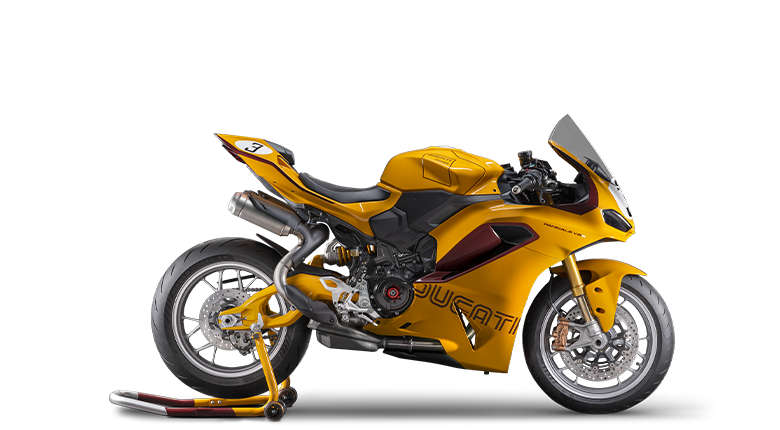
Panigale V2 S 100 (750 Super Sport Desmo – 1975)
The livery of the Panigale V2 S 100 is inspired by the graphics of the 750 Super Sport Desmo ridden by Franco Uncini in the 1975 Italian Championship, which he won. The bike was managed by the team founded by Bruno Spaggiari.
At the end of 1973, Ducati decided to entrust the team management to Bruno Spaggiari, a former racer and founder of his own team. Spaggiari was supported by the Bologna-based manufacturer to compete in the Italian Championship for production-based motorcycles with the powerful 750 Super Sport Desmo, a bike highly appreciated by the discerning public.
The yellow livery recalled the road-going 750 Sport models and was combined with details in a distinctive brown/burgundy colour that was used at the time on inboard marine engines assembled in the Borgo Panigale factory.
The Panigale V2 S 100 is enhanced by an Alcantara seat with an embroidered Ducati 100 logo, billet sports handlebars, a steering damper and the name and serial number on a Centenary Bronze plate riveted to the billet triple clamp. Furthermore, this Panigale V2 is the first model in the new Ducati V2 family to feature a dry clutch, developed specifically for this model, making the engine particularly compact. The standard equipment also includes mirror and license plate removal kits, an open clutch cover and a Centenary Bronze-coloured billet aluminium fuel cap crown, all designed for track use.
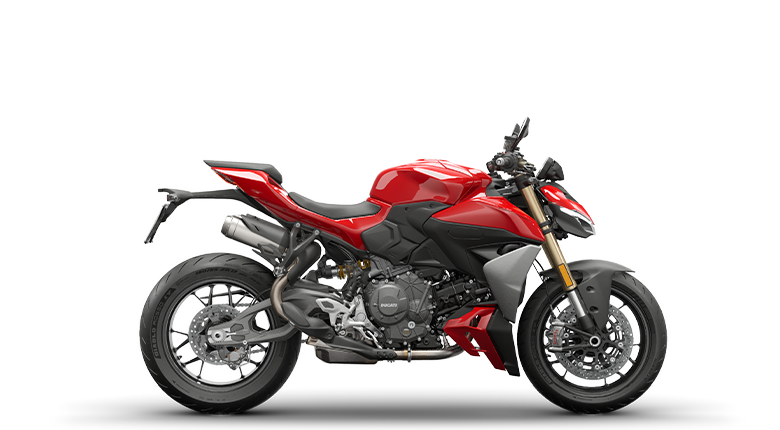
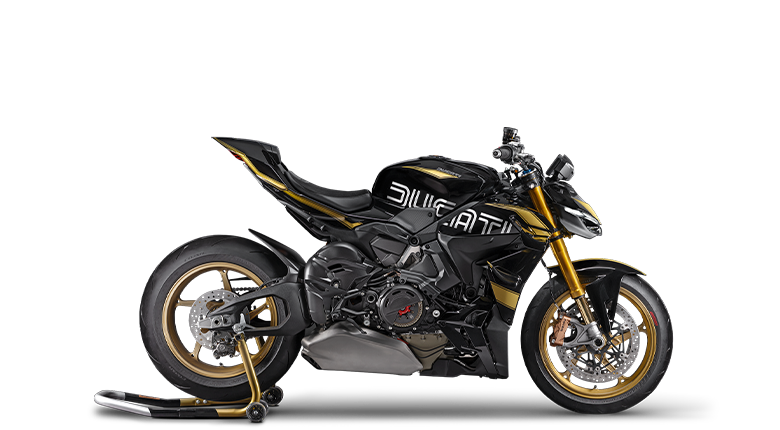
Streetfighter V4 S 100 (Ducati 900 Sport Desmo Darmah – 1979)
The livery of the Streetfighter V4 S 100 is inspired by the graphics of the 1979 900 Sport Desmo Darmah.
In the 1970s and 1980s, black and gold graphics were extremely fashionable in the world of motorsports, and Ducati was no exception. Specifically, it applied this colour scheme to the 900 Sport Desmo Darmah, essentially a Streetfighter before its time.
In Italy, there was also a strong fascination with exotic countries, a fascination that translated, in Borgo Panigale, into purely fictional names like Darmah, or details such as the distinctive tiger head depicted on the side panels of the 900 Sport Desmo Darmah. The head is a highly distinctive graphic element, also echoed in the undertail of the Streetfighter V4 Collezione 100 and in the matching helmet and jacket.
The Streetfighter V4 S 100 is enhanced by an Alcantara seat with embroidered Ducati 100 logo, a rear mudguard, engine cover, and exhaust in premium carbon fibre, a dry clutch and the name and serial number on a distinctive Centenary Bronze plate on the billet aluminium triple clamp. The standard equipment includes mirror and license plate removal kits, an open clutch cover and a Centenary Bronze billet aluminium fuel cap crown, all designed for track use.
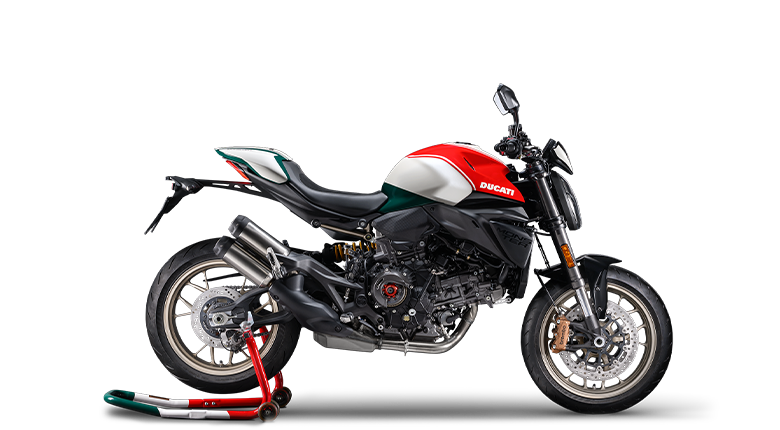
Monster 100 (Monster S4Rs Tricolore – 2008)
The tricolour livery of the Monster 100 is inspired by the graphics of the 2008 Monster S4Rs Tricolore.
The Monster S4Rs Tricolore effectively represented a sort of final edition for the first generation Monster, the one Ducati produced from 5 March 1993 until 2008, becoming one of the most recognizable and iconic models not only for the Borgo Panigale manufacturer but for the motorcycle world in general.
The Monster 100 is made unique by its dry clutch, complete with a carbon fibre cover supplied with the package, and by the Alcantara seat with embroidered Ducati 100 logo, the windshield and the seat cover kit that give it a single-seater look. The Centenary Bronze plate with the name and serial number of the model is riveted to the billet steering clamps. The colour is also used on the fuel tank cap ring and brake calipers, as is the case with all the bikes in the 100 collection.
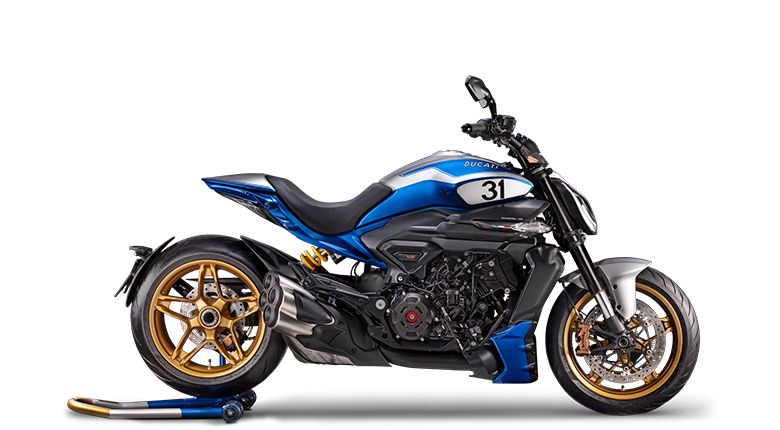
XDiavel V4 100 (750 Super Sport “California Hot Rod” – 1977)
The livery of the XDiavel V4 100 is inspired by the graphics of the special 750 Super Sport called the “California Hot Rod,” the bike on which Cook Neilson made Ducati history by winning at Daytona in 1977. The event was of great significance as it was the first time an Italian motorcycle had won a production-derived race in the United States, an event that significantly increased Ducati's popularity and sales overseas.
In the mid-1970s, Ducati's visibility in the United States was essentially limited to just one model, the Scrambler, a quasi-off-roader imported by the Berliner brothers, but things changed in 1977 thanks to Cook Neilson's memorable triumph on the Daytona oval track.
The XDiavel V4 100 is made unique, even in the 100 collection, by the leather seat with embroidered Ducati 100 logo and the central section of the handlebar machined from solid with the name and serial number on a riveted plate in Centenary Bronze finish—high-quality mechanical details. The dry clutch makes the riding experience even more personal. Standard equipment includes a leather passenger seat, Centenary Bronze fuel cap ring and open clutch cover, the latter not approved for road use.
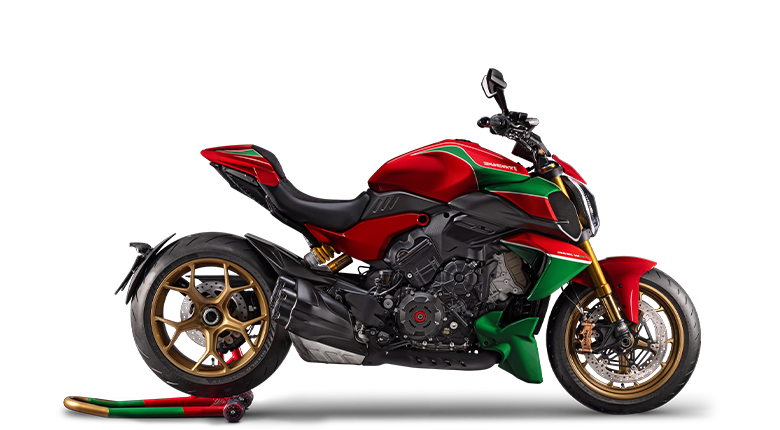
Diavel V4 RS 100 (900 Replica – 1979)
The livery of the Diavel V4 RS 100 is inspired by the graphics of the 1979 road-going 900 Replica, one of the most iconic motorcycles in Ducati's history.
Following Ducati's incredible victory at the 1978 Tourist Trophy, the Borgo Panigale manufacturer began the production of a series of motorcycles evoking the livery of the 900 that won on the Isle of Man. Thus was born the 900 Replica, the first road-going replica of a Ducati racing bike, which immediately became one of the most highly coveted items among Ducati enthusiasts.
The distinctive green and red livery with white stripes, which mirrored the colour scheme of the victorious bike at the Tourist Trophy, also represents the very first example of an "almost" Italian-style livery, a colour scheme that Ducati would later apply to some of its sportiest and most exclusive models in the years to come.
The 900 Replica was one of Ducati's most successful models, produced for five years until its discontinuation at the end of 1984.
The Diavel V4 RS 100 is based on the Diavel V4 RS, equipped with a Desmosedici Stradale engine. This model is enhanced by an Alcantara seat with an embroidered Ducati 100 logo, a machined-from-solid handlebar centre with the name and serial number on a Centenary Bronze riveted plate, and a fuel cap rim in the same high-quality finish. Standard equipment includes an Alcantara passenger seat, a machined-from-solid fuel cap and an open clutch cover, the latter of which are not approved for road use.
Multistrada V4 RS 100 (500 SL Pantah – 1979)
The livery of the Multistrada V4 RS 100 is inspired by the graphics of the 500 SL Pantah from 1979, a year that saw major technical innovations at Ducati aimed at modernizing and updating the motorcycles produced in Borgo Panigale.
One new model to arrive that year was the 500 SL Pantah, the first Ducati equipped with a trellis frame—albeit very different to the trellis that has distinguished the brand for almost fifty years—and the Pantah engine, which did away with the bevel gears used since the Gran Sport Marianna (1955).
The bike, which boasts the typical boxy design of early 1980s motorcycles and a livery featuring the logo designed for Ducati by car designer Giorgetto Giugiaro, was appreciated for its ease of riding and light weight. Since the Multistrada V4 RS 100 was developed on the technical base of the top-of-the-range Multistrada V4 RS, featuring the Desmosedici Stradale engine, the livery also features the Desmo logo on the tail fairing.
The Multistrada V4 RS 100 features an Alcantara seat with an embroidered Ducati 100 logo, and the name and serial number on a Centenary Bronze plate attached to the handlebar clamps and the billet aluminium triple clamp. The standard equipment includes a Centenary Bronze fuel cap ring and a carbon fibre open clutch cover, both of which are not approved for road use.
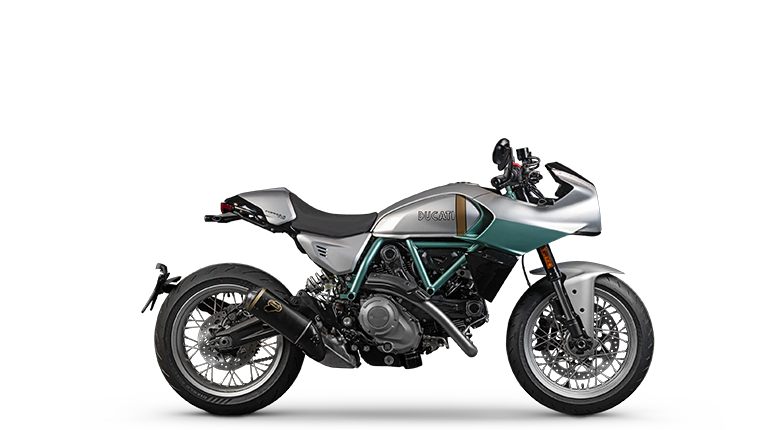
Scrambler 100 (250 Scrambler – 1962)
The livery of the Scrambler 100 is inspired by the graphics of the 1962 250 Scrambler, the first version of the Ducati Scrambler, produced exclusively for the US market.
The origins of the Scrambler are closely linked to the figure of its first American importer, Joe Berliner, the man who strongly desired a new model to sell stateside. Ducati was enjoying the media success of Monetti and Tartarini's 1957 round-the-world tour, and the hype surrounding that venture also reached America, raising the profile of the Bologna-based brand, which until then had been virtually unknown.
Berliner requested an off-road dirt track bike from Ducati, a concept that hadn't previously been envisaged in Borgo Panigale, but which actually came into being with the 250 Scrambler in 1962.
The technical base of the Scrambler 100 is the Scrambler Nightshift, enhanced by an Alcantara seat with an embroidered Ducati 100 logo and a Centenary Bronze finish plate with the model's name and serial number, riveted to the billet steering clamps. The billet fuel cap, with a Centenary Bronze ring, is also included.
Hypermotard V2 SP 100 (Ducati 860 “24 Horas de Montjuïc” – 1975)
The livery of the Hypermotard V2 SP 100 is inspired by the 860 “24 Horas de Montjuïc”.
After winning the 1972 Imola 200, Ducati management believed that the right path to restoring the brand's popularity was through production-derived racing bikes, competing particularly in endurance races.
To this end, Ducati needed to expand its twin-cylinder range with a larger displacement engine than the classic 750, capable of withstanding the stress of long endurance races such as the Bol D'Or and the 24 Horas de Montjuïc, a race which the Borgo Panigale manufacturer won on several occasions.
The Ducati 860 made its winning debut in 1973 with the prototype of the Ducati 860 Desmo, which would later become the road-going Ducati 900 Super Sport. In 1975, riders Salvador Canellas and Benjamin "Min" Grau, who had already won in 1973 with the Bologna-built twin-cylinder, repeated their success in the Catalan race, but with the bright colours of Nepoti and Caracchi's NCR team.
The Hypermotard V2 SP 100 is based on the SP version, characterized by Öhlins suspension and forged wheels. It features an Alcantara seat with an embroidered Ducati 100 logo, and the name and serial number on a plaque in high-quality Centenary Bronze riveted to the handlebar clamps and the machined-from-solid aluminium triple clamp. The Hypermotard V2 from the 100 collection also features a dry clutch. Standard equipment includes a Centenary Bronze fuel tank cap and a carbon fibre open clutch cover, both of which are not approved for road use.
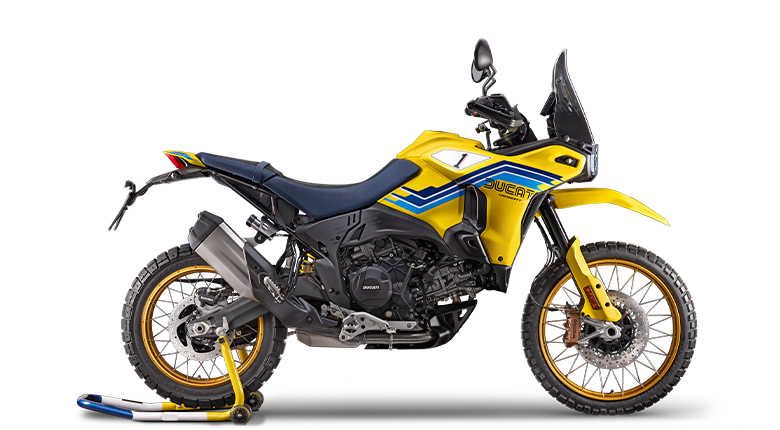
DesertX 100 (Pantah “Ice” – 1981)
The livery of the DesertX 100 is inspired by the graphics of the 1981 Pantah “Ice,” one of the most curious examples of product placement in Ducati's history.
The Pantah “Ice” was nothing more than a modified Pantah 500, characterized by the addition of unusual, studded tyres and the removal of the braking system, so that it could be used on ice tracks.
At the time, Ducati was managed by state-owned holdings, which also controlled car manufacturers like Alfa Romeo. In the early 1980s EFIM, the body that controlled both Ducati and Alfa Romeo, organized a championship for Alfasud cars on the ice tracks of the Alps. The races were held in two heats; during the break between the first and second races, the brightly coloured Pantah “Ice” bikes put on a spectacular show for the crowd. The “Ice” bikes were produced in various liveries; the one chosen for the DesertX 100, yellow with blue stripes, belongs to a model that until a few years ago was part of the Ducati Museum collection.
The DesertX 100 features an Alcantara seat with an embroidered Ducati 100 logo, and the name and serial number on a Centenary Bronze plate attached to the handlebar risers of the billet triple clamp. The high front mudguard and aluminium radiator grille enhance the model's off-road credentials. Standard equipment includes a Centenary Bronze fuel cap and a headlight grille, which are not approved for road use.
* Not available on the DesertX 100 and Scrambler 100
** Offer varies according to the different countries.
#Ducati #Collezione100